
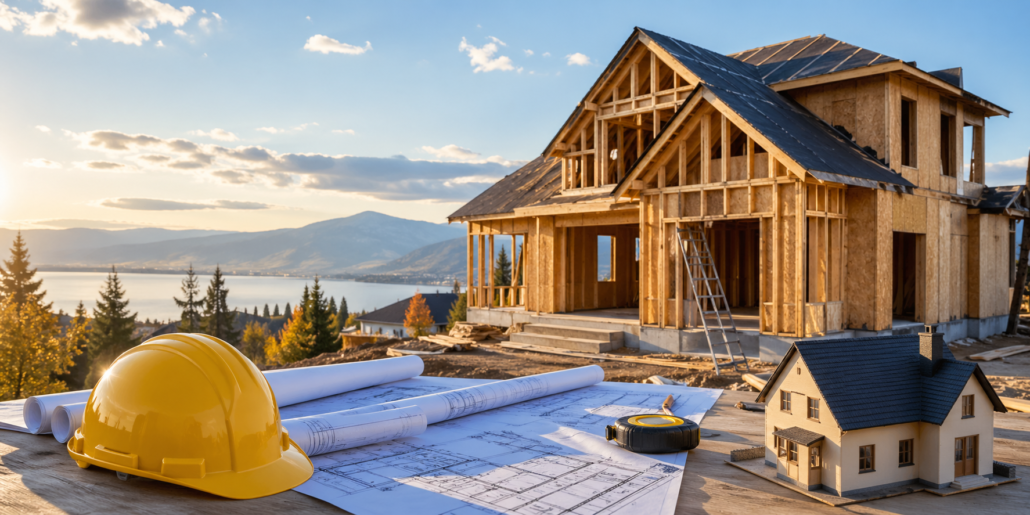
Home Replacement Cost: Why It Matters More Than Your Market Value
Understanding Home Replacement Cost to Protect What Really Matters
When most homeowners think about insurance, they picture what their home could sell for. Fair enough. It’s the number everyone talks about. But here’s the catch: your home replacement cost is often a completely different figure… and it’s the one that actually protects you.
We see confusion around these concepts all the time. And it can be costly. Homeowners can be stunned to learn that their rebuild cost doesn’t come close to their home’s market value. Or that their policy won’t even cover the framing on a new build.
Market value is what a buyer pays you. Home replacement cost is what a contractor charges you. In the volatile 2026 economy, those two numbers have never been further apart.
What Is Home Replacement Cost, Really?
Your home replacement cost is the amount it would take to rebuild your home from the ground up. Today.
Not what you paid.
Not what it’s worth on the market.
Not what your neighbour sold for last spring.
We’re talking about:
- Labour and materials at current prices
- Demolition and debris removal
- Permits and code upgrades
- Skilled trades (who are in short supply across BC)
If your home were lost to fire or another disaster, this is the number your insurance needs to cover. No shortcuts.
Market Value vs. Replacement Cost: Why the Gap Exists
Here’s where things get interesting.Market value includes land. Replacement cost doesn’t. And in places like Kelowna and the Okanagan, land value can be a huge portion of the price. That skews perception.
Let’s break it down:
Market Value: Land + location + demand + structure
Replacement Cost: Materials + labour + rebuilding expenses
In a hot market, your home might sell for far more than it costs to rebuild. In other cases, especially with custom builds or rising construction costs, the opposite can happen.
Either way, guessing is risky.
Why Home Replacement Cost Has Increased (and Keeps Changing)
If you haven’t reviewed your policy in a while, this part matters.
Construction costs in British Columbia have shifted dramatically in recent years. You’ve probably felt it firsthand. Renovations aren’t cheap anymore.
Here’s what’s driving it:
Labour Shortages
Qualified tradespeople are in high demand. That drives up rebuild costs quickly, especially after a large-scale event like a wildfire.
Material Costs
Lumber, concrete, and specialty finishes fluctuate. Supply chain issues haven’t fully stabilized.
Building Code Updates
New homes must meet current codes. That means better insulation, improved safety standards, and sometimes entirely new systems.
If your policy hasn’t kept up? You could be underinsured without realizing it.
The Hidden Risk of Being Underinsured
Let’s say your policy covers $450,000. Sounds solid. But rebuilding your home today would cost $600,000.
That gap? It doesn’t disappear.
In some cases, insurers apply a “co-insurance” clause. That means you may only receive a percentage of the claim, not the full amount, because your coverage didn’t meet a required threshold.
It’s not a situation anyone wants to be in after a loss. And yet, it happens more often than you’d think.
How Insurers Calculate Home Replacement Cost
This isn’t guesswork—or at least, it shouldn’t be. We use detailed valuation tools that factor in:
- Square footage and layout
- Construction type and materials
- Roof, foundation, and finishes
- Local labour rates
- Regional rebuilding costs
It’s a data-driven process, but it still benefits from a human touch. Why? Because no two homes are identical.
That custom kitchen you added? The timber framing? The high-end windows? They all matter.
When Should You Review Your Replacement Cost?
More often than you think. Don’t wait for your renewal notice to get the ball rolling. You should trigger a review if:
- You finished the basement: That “man cave” added significant value.
- You upgraded the kitchen: High-end appliances and custom cabinetry change your math.
- The neighbourhood changed: If a major development nearby has made local contractors busier, your local rebuild cost just went up.
- Every renewal period: Policies often include inflation adjustments, but they’re not always enough in volatile markets.
- After major market shifts: Think wildfires, floods, or supply chain disruptions. These events can spike local rebuild costs overnight.
If you’re unsure, it’s worth asking. A quick review can prevent a major gap later.
Guaranteed vs. Extended Replacement Cost: What’s the Difference?
This is where policy details matter. Not all “replacement” coverage is equal. You need to know which “safety net” you’re buying.
Guaranteed Replacement Cost
Covers the full cost to rebuild your home—even if it exceeds your policy limit. Sounds ideal? It is. But not every home qualifies, and conditions apply.
Extended Replacement Cost
Provides a buffer; typically 10% to 25% above your policy limit.
Helpful, but not unlimited.
The right option depends on your home, your risk tolerance, and your insurer’s offerings. This is where working with a broker makes a difference.
A Quick Reality Check: Would Your Coverage Hold Up?
Ask yourself:
- When was the last time my home was professionally evaluated for replacement cost?
- Have I made upgrades that aren’t reflected in my policy?
- Do I understand the limits and conditions of my coverage?
If there’s hesitation on any of those… it’s time for a conversation.
Why a Local Kelowna Broker Matters
A local broker knows how much things cost in the region. We live where you live. We see the construction cranes and we know the local builders. We ensure your home replacement cost reflects the reality of our local economy, not a national average.
Common Questions About Home Replacement Cost
Does my property tax assessment show my replacement cost? No. BC Assessment values are for tax purposes and are often a year behind. They focus heavily on market trends, not construction line items.
If I have a mortgage, doesn’t the bank handle this? Banks only care that the loan is covered. They want to protect their investment, not necessarily your ability to rebuild your dream home exactly as it was.
Can I lower my cost by doing the work myself? Insurance payouts are based on professional contractor rates. While you can save money on your own time, the policy must reflect what it would cost to hire a pro if you aren’t able to do the work.
The Bottom Line on Home Replacement Cost
Here’s the truth: your home replacement cost isn’t a static number. It shifts with the market, with your upgrades, and with the world around you.
Ignoring it doesn’t make it go away.
But staying on top of it? That’s how you protect your investment—and your peace of mind.
If you haven’t reviewed your policy recently, now’s a good time. Contact us for a full review of your coverage. Because when it comes to home replacement cost, close enough isn’t good enough.


